Introduction: Why This Question Matters More Than Ever
What is a strong password? This question sounds simple, yet it quietly protects your emails, bank accounts, social media profiles, work systems, and even your identity. In today’s digital life, passwords are like the keys to your house. If the key is weak, anyone can walk in. If the key is strong, you sleep peacefully. Unfortunately, many people still use passwords like 123456, password, or their own name. These are easy to remember, but they are also easy to break.
Think about this for a moment. A friend of mine once lost access to his email because he reused the same weak password everywhere. One small shopping website got hacked, and within hours, hackers tried the same password on his Gmail, Facebook, and even his bank app. This is not a rare story. It happens every day, to students, office workers, business owners, and even tech experts. That is exactly why understanding what makes a password strong is no longer optional—it is necessary.
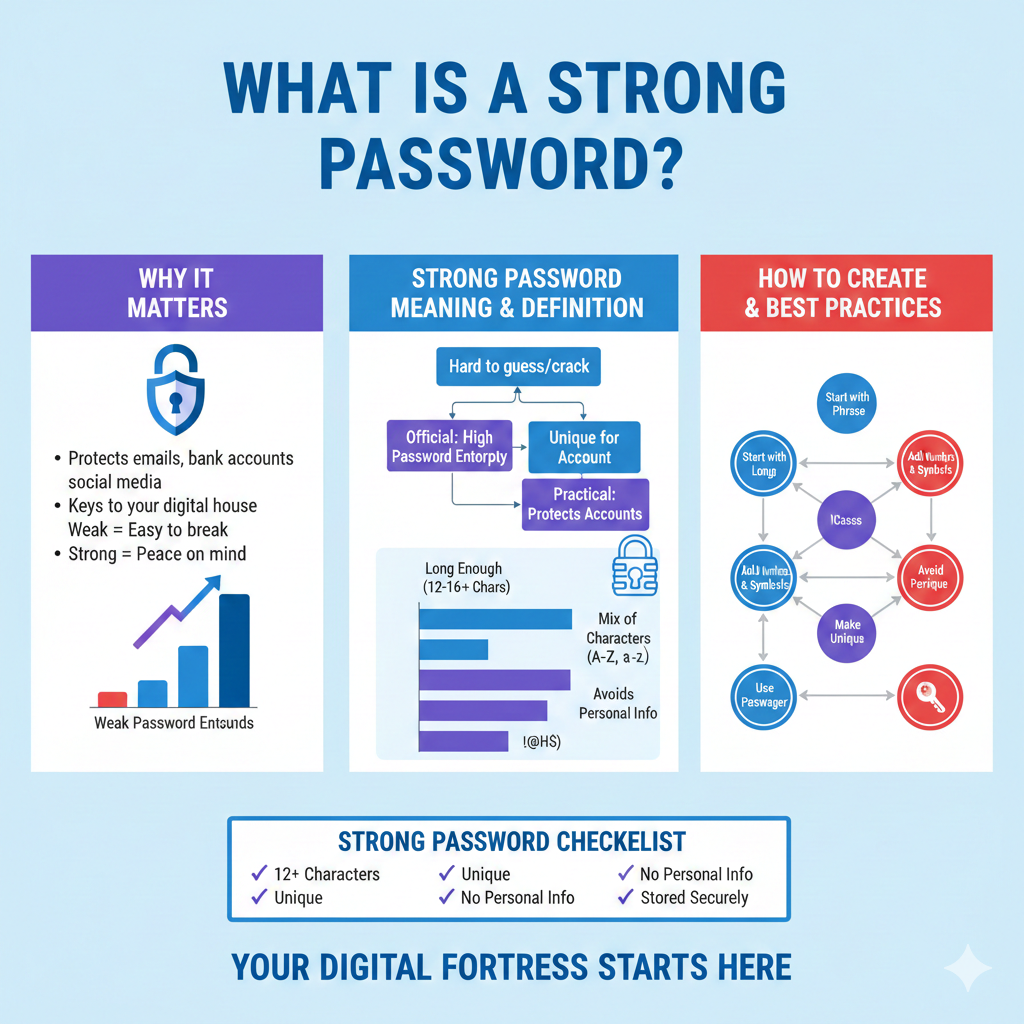
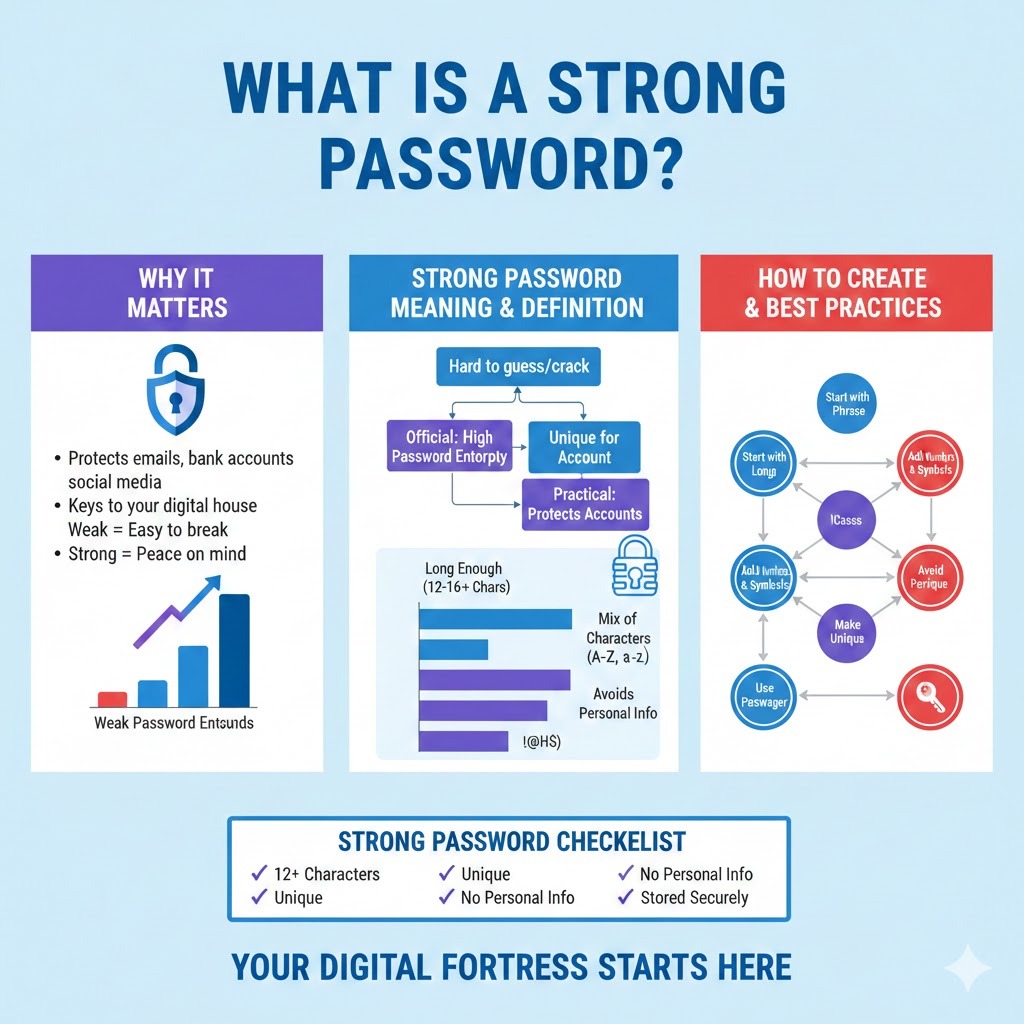
A strong password is hard for other people and computer programs to guess, crack, or steal. It protects your online security, your digital privacy, and your peace of mind. Moreover, as cyber threats grow smarter, the meaning of a strong password also evolves. What was considered strong five years ago may not be strong today.
In this complete guide, we will explain the strong password meaning, the strong password definition, and how you can create one step by step—even if you are not technical at all. We will use real-life examples, easy language, and practical tips so anyone can follow along. By the end, you will clearly know how strong should my password be, how to test it, and how to remember it without stress.
Strong Password Meaning Explained
The strong password’s meaning is very simple: it is a password that keeps your account safe from unauthorized access. In other words, it is designed to protect you from hackers, scammers, and automated attack tools. A strong password does not rely on luck. Instead, it relies on smart structure, length, and randomness.
To understand this better, imagine two locks. One lock is small and rusty, while the other is heavy and modern. Which one would a thief choose? Obviously, the weak one. The same logic applies to passwords. Weak passwords invite attackers, while strong passwords force them to move on.
A strong password usually includes a mix of uppercase letters, lowercase letters, numbers, and symbols. More importantly, it avoids personal information like your name, birthday, phone number, or favorite team. These details are often easy to find on social media. Therefore, using them makes your password weak.
Another key part of what is considered a strong password is uniqueness. If you use the same password on multiple websites, one data breach can expose all your accounts. This is known as password reuse risk, and it is one of the biggest reasons accounts get hacked.
So, when we talk about what makes a password strong, we are really talking about how difficult it is for someone—or something—to guess it. The harder it is to guess, the stronger it is. Simple as that.
Strong Password Definition (Official and Practical)
The strong password definition can be explained in two ways: official and practical. Official definitions often come from cybersecurity organizations like NIST or security researchers. Practically, however, users want something easier to understand.
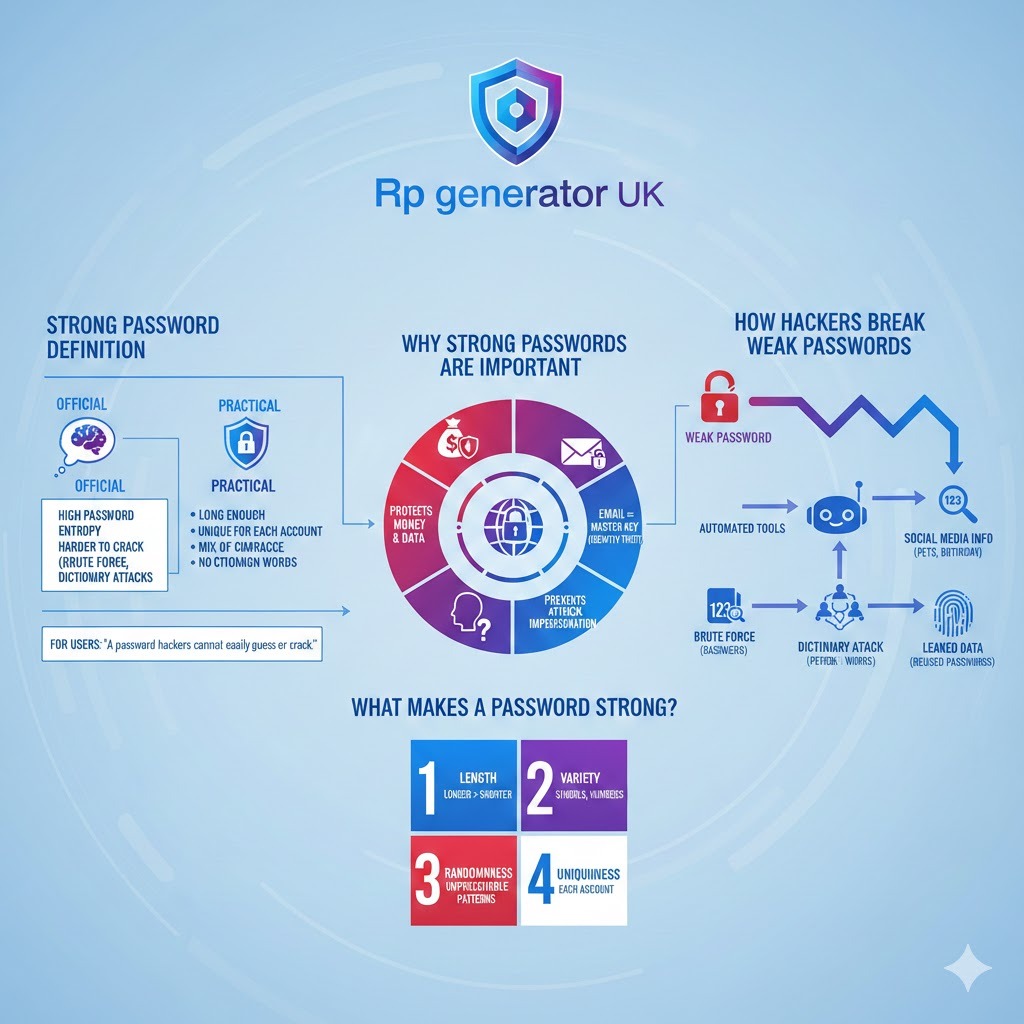
Officially, a strong password is one that has high password entropy, meaning it has many possible combinations. The more combinations, the harder it is to crack using methods like brute force attacks or dictionary attacks.
In practical terms, a strong password is one that:
- Is long enough
- Is unique for each account
- Uses a mix of characters
- Does not include personal or common words
For everyday users, the strong password definition means: “A password that hackers cannot easily guess or crack.” This definition works for beginners, students, office workers, and non-technical users alike.
Moreover, a strong password supports secure authentication and protects against identity theft, data breaches, and hacked accounts. Without it, even the best apps and websites cannot keep you safe.
Why Strong Passwords Are Important?
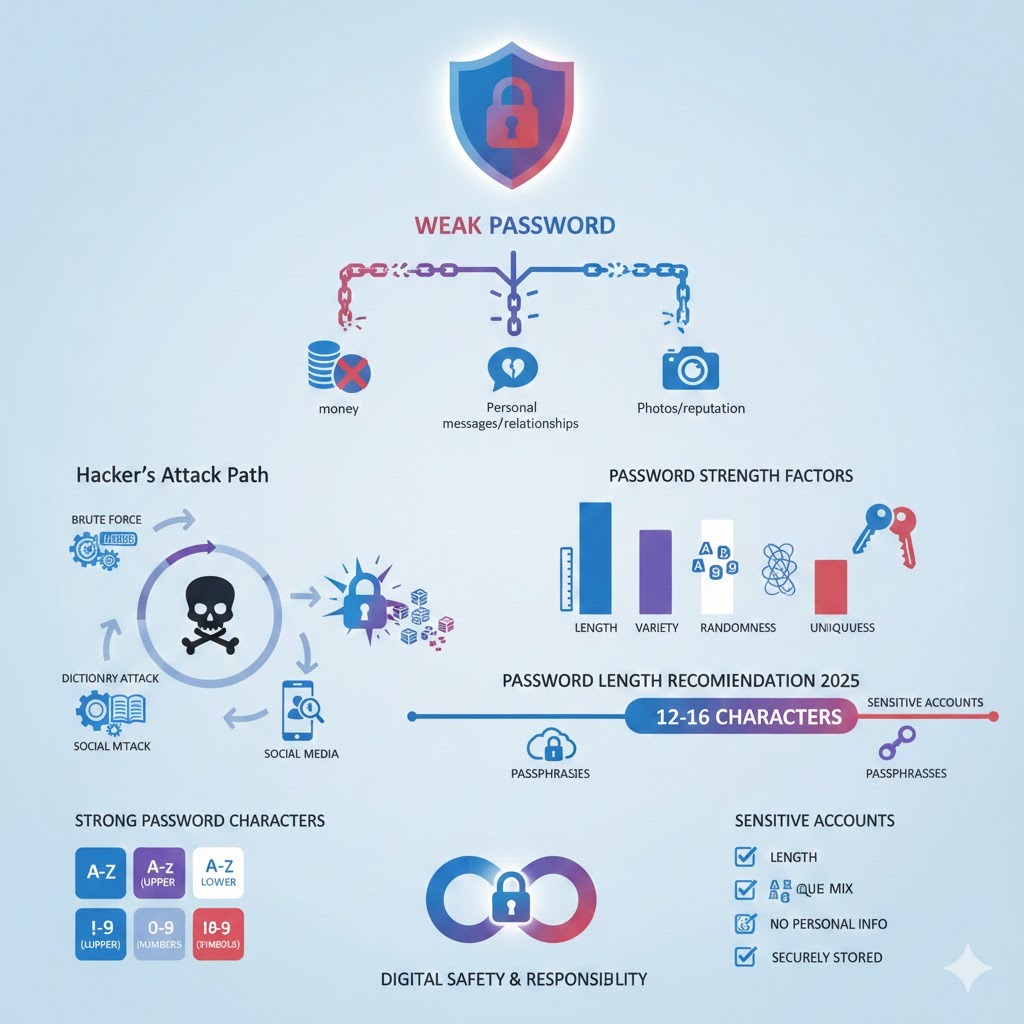
Understanding why strong passwords are important can change how seriously you take password security. Passwords protect your money, your personal messages, your photos, and even your professional reputation. A single weak password can open the door to massive damage.
For example, if someone breaks into your email, they can reset passwords for almost all your other accounts. This is why a strong password for email is critical. Email is often the master key to your digital life.
Strong passwords also help protect against identity theft, where criminals pretend to be you. They can apply for loans, send fake messages, or even damage your relationships. All of this can start with one weak password.
In addition, businesses rely on strong password policies to protect customer data. Weak passwords are a major reason behind large data breaches that expose millions of users.
Therefore, using strong passwords is not just about personal safety—it is also about responsibility in the digital world.
How Hackers Break Weak Passwords
To fully understand strong password vs weak password, it helps to know how hackers break weak passwords. Hackers do not usually guess passwords manually. Instead, they use automated tools that can try millions of combinations in seconds.
One common method is the brute force attack, where software tries every possible combination until it finds the right one. Short passwords fall very quickly in such attacks. Another method is the dictionary attack, where common words and leaked passwords are tested first.
Hackers also use information from social media. If your password includes your pet’s name or birth year, it becomes very easy to guess. This is why avoiding personal details is a core part of strong password rules.
Finally, hackers take advantage of leaked data from previous breaches. If you reuse passwords, they can unlock multiple accounts at once.
What Makes a Password Strong?
So, what makes a password strong? The answer lies in a few clear elements that work together. First, length matters. A long password is always stronger than a short one, even if it uses simple characters.
Second, character variety matters. A strong password with symbols and numbers is harder to crack than one with letters only. Third, randomness matters. Predictable patterns make passwords weak.
Lastly, uniqueness matters. Each account needs its own password. This is especially important for banking apps, email, and work accounts.
When these elements come together, you get a password that truly protects you.
Strong Password Length Recommendation
The strong password length recommendation in 2025 is at least 12 to 16 characters. Many security experts now suggest even longer passwords for sensitive accounts.
Longer passwords increase password entropy, which means more possible combinations. This makes cracking extremely difficult, even for powerful computers.
Using a long password does not mean it has to be hard to remember. You can use passphrases—long sentences with random words. This approach is beginner-friendly and highly secure.
Strong Password Characters Explained
Understanding strong password characters explained helps you build better passwords. A strong password usually includes:
- Uppercase letters (A–Z)
- Lowercase letters (a–z)
- Numbers (0–9)
- Symbols (!, @, #, $, %, etc.)
Each added character type increases complexity and security.
How to Create a Strong Password (Step-by-Step Guide)
Here is a simple strong password step by step guide:
- Start with a long base phrase
- Mix uppercase and lowercase letters
- Add numbers and symbols
- Avoid personal information
- Make it unique for each account
Following these steps ensures you know exactly how to create a strong password.
Strong Password Examples That Work
A strong password example could look like this: Sun!River9Clock#Moon. It is long, random, and hard to guess.
For beginners, a strong password example for beginners might use a passphrase style: BlueCarpet!7RainyDays.
Strong Password Best Practices
Strong password best practices include using a password manager, enabling two-factor authentication, and avoiding password reuse.
These habits dramatically improve your account security.
How to Test Password Strength
You can use a password checker or password analyzer tool to see how strong your password is. These tools estimate how long it would take to crack your password.
How to Remember Strong Passwords
Many people worry about memory. The solution is using passphrases or a secure password manager. This helps you maintain password hygiene without stress.
Strong Password Guidelines 2025
The strong password guidelines 2025 focus on length, uniqueness, and multi-factor authentication rather than forced frequent changes.
Strong Password Checklist
Use this strong password checklist:
- At least 12 characters
- Unique per account
- Mix of characters
- No personal info
- Stored securely
Conclusion:
A strong password protects you from today’s cyber threats. It is long, unique, random, and carefully created. Whether you are a student, a professional, or a beginner, strong passwords are your first line of defence in the digital world.
By following this strong password creation guide, you take control of your online safety—one password at a time.
Faqs About What is a strong password?
1. What is a strong password?
A strong password is one that is hard for hackers or computer programs to guess. It protects your online accounts from unauthorized access.
2. What is considered a strong password?
A strong password is usually long (12–16 characters), unique, and uses a mix of letters, numbers, and symbols.
3. What is the strong password meaning in simple words?
In simple words, a strong password keeps your account safe and cannot be easily guessed.
4. What makes a password strong?
Length, randomness, different characters, and uniqueness make a password strong.
5. Why are strong passwords important?
Strong passwords protect your email, money, personal data, and online identity from hackers.
6. How strong should my password be?
Your password should be long enough and complex enough that it would take years to crack.
7. What is a strong password example?
An example of a strong password is Green!Moon7RiverSky.
8. What is a strong password example for beginners?
A beginner-friendly example is Happy!Dog9BlueRoad.
9. What are strong password rules?
Strong password rules include using long passwords, avoiding personal info, and never reusing passwords.
10. What are strong password requirements?
A strong password requires length, mixed characters, and uniqueness for each account.
11. What is a secure password?
A secure password is one that protects your account from hacking and data breaches.
12. How do hackers break weak passwords?
Hackers use tools like brute force attacks, dictionary attacks, and leaked password lists.
13. What is the difference between a strong password and a weak password?
A strong password is long and random, while a weak password is short, common, or predictable.
14. How can I test password strength?
You can use online password checker or password analyzer tools to test strength.
15. What is the recommended password length in 2025?
The recommended strong password length in 2025 is at least 12 to 16 characters.
16. What characters should a strong password include?
A strong password should include uppercase letters, lowercase letters, numbers, and symbols.
17. What is a strong password for email accounts?
A strong email password should be unique, long, and protected with two-factor authentication.
18. What is a strong password for social media?
A strong social media password should be different from your email and banking passwords.
19. What is a strong password for banking apps?
A strong banking password should be long, random, and combined with multi-factor authentication.
20. What are common mistakes in password creation?
Using short passwords, personal details, or reusing the same password are common mistakes.
21. How often should you change passwords?
Change passwords if they are weak, reused, or involved in a data breach.
22. What is a strong password policy?
A strong password policy defines rules for creating and managing secure passwords.
23. How can beginners create strong passwords?
Beginners can use long passphrases with random words, numbers, and symbols.
24. How can I remember strong passwords?
You can remember strong passwords by using passphrases or a password manager.
25. Are password managers safe?
Yes, trusted password managers are safe and help store strong passwords securely.
26. What is a strong password for work accounts?
A strong work password should follow company rules and never be reused elsewhere.
27. What is a strong password for students?
Students should use long, easy-to-remember passwords for school and learning platforms.
28. What is a strong password for online shopping?
A strong shopping password should be unique to reduce financial risk.
29. Can strong passwords fully prevent hacking?
Strong passwords greatly reduce risk but work best with extra security like two-factor authentication.
30. What is the first step in creating a strong password?
The first step is deciding to stop using short or reused passwords and choosing a long, unique one.