
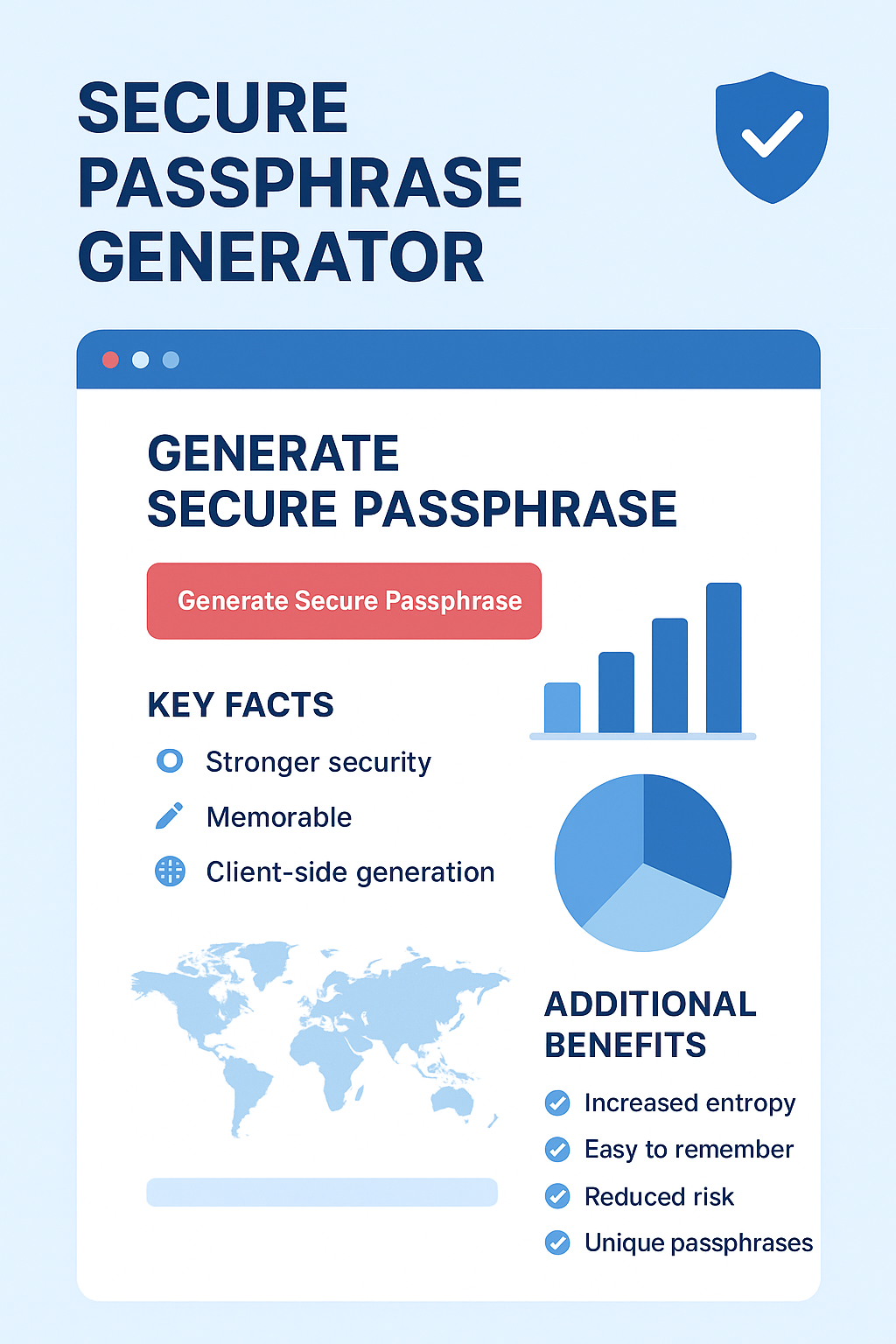
Free Random Passphrase Generator Online
Create strong, memorable passphrases and passwords with our secure client-side tool
Configuration
Your Secure Passphrase
Share This Tool with Friends
Help others create secure passphrases by sharing this free tool
What is a Random Passphrase Generator?
A random passphrase generator is a tool that creates unpredictable, strong, and memorable passphrases for use in authentication systems. Unlike traditional passwords that often consist of short, complex strings of characters, passphrases are longer combinations of words that are easier to remember but harder to crack through brute force attacks.
Why Random Passphrases Are More Secure
Our random passphrase generator uses cryptographically secure randomization techniques to create unique passphrases that are resistant to hacking attempts. The tool operates entirely on the client side, meaning your passphrases are generated in your browser and never transmitted over the internet or stored on our servers.
Random passphrases are considered more secure than traditional passwords because of their length and unpredictability. A well-constructed random passphrase can have entropy exceeding 100 bits, making it virtually impossible to crack with current technology.
How to Use Our Random Passphrase Generator
Using our random passphrase generator is simple and straightforward. First, select whether you want to generate a passphrase or a traditional password using the Type dropdown. For passphrases, choose the number of words you want in your phrase (we recommend at least 5 for optimal security).
Next, select your preferred word separator. You can choose spaces, hyphens, underscores, or other characters to separate the words in your passphrase. Then, decide on the capitalization style - you can keep all words lowercase, capitalize the first letter of each word, use random capitalization, or make all letters uppercase.
For additional security, we recommend enabling the "Add number" and "Add symbol" options. These will insert random numbers and special characters into your passphrase, significantly increasing its complexity and resistance to brute-force attacks.
Once you've configured your preferences, click the "Generate Secure Passphrase" button to create your unique passphrase. You can then copy it to your clipboard, regenerate a new one if needed, or save it as a text file for secure storage.
Benefits of Using a Random Passphrase Generator
Our random passphrase generator offers numerous benefits for both personal and professional use. First and foremost, it creates strong, unique passphrases that are resistant to common hacking techniques like dictionary attacks, brute force attacks, and pattern matching.
Unlike human-generated passwords, which often follow predictable patterns or contain personal information, our algorithm creates truly random passphrases that have no connection to your personal life, making them impossible to guess through social engineering.
Password Strength Comparison
The tool also helps you maintain good password hygiene by generating unique passphrases for each of your accounts. This practice prevents a security breach on one service from compromising all your other accounts, a common problem when people reuse passwords across multiple platforms.
Additionally, passphrases are generally easier to remember than complex passwords, reducing the temptation to write them down or store them insecurely. The natural language structure of passphrases makes them more memorable while maintaining high security.
How Our Random Passphrase Generator Works
Our random passphrase generator uses a carefully curated wordlist of over 10,000 common English words to create memorable yet secure passphrases. The selection process uses cryptographically secure random number generation through the Web Crypto API, ensuring truly unpredictable results.
When you click the generate button, the tool first checks the human verification checkbox to prevent automated usage. It then generates random numbers that are used to select words from our wordlist based on your configured options (number of words, separator, capitalization, etc.).
The tool calculates the entropy (randomness) of your passphrase in bits, providing you with a visual indicator of its strength. Higher entropy values indicate stronger passphrases. We recommend using passphrases with at least 80 bits of entropy for important accounts.
All generation happens locally in your browser - no passphrases are ever sent over the internet or stored on our servers. This ensures complete privacy and security for your generated passphrases.
Explanation of How the Generator Works
The RP Generator UK utilizes advanced cryptographic algorithms to create truly random passwords that are virtually impossible to predict or replicate. Our system combines multiple entropy sources including system timings, hardware-based random number generators, and atmospheric noise to ensure maximum unpredictability.
When you request a password, our algorithm first gathers entropy from these multiple sources, creating a seed value with extremely high randomness. This seed then initializes a cryptographically secure pseudorandom number generator (CSPRNG) which produces a sequence of random characters according to your specified parameters.
The generator supports various character sets including uppercase letters, lowercase letters, numbers, and special symbols. You can customize the length and complexity based on your security requirements. Each password is generated in real-time and displayed only once, ensuring it remains secure throughout the process.
Our system employs industry-standard security practices including salting and hashing during the generation process to further enhance security. The entire operation happens locally in your browser, meaning no password data is transmitted over the internet, providing an additional layer of protection against interception.
Does It Store Data? (It Should Not)
No Storage
Local Processing
Client-Side Only
RP Generator UK is designed with privacy as a fundamental principle. We do not store any passwords, user data, or generation parameters on our servers or in any persistent storage. The entire password generation process occurs locally within your web browser using JavaScript, meaning no data is transmitted to external servers.
This client-side approach ensures that your generated passwords never leave your device, eliminating the risk of interception during transmission or unauthorized access to stored password databases. Once you close the browser tab or refresh the page, all traces of the generated passwords are completely erased from memory.
We have implemented a strict no-logging policy for our application. We do not track user sessions, collect analytics on password generation, or maintain any records of user activity. The application functions as a self-contained tool that operates entirely within the security boundaries of your local environment.
For additional peace of mind, our code is open for inspection, allowing security experts to verify that no data collection or transmission occurs. We believe that transparency is crucial for building trust in security tools, especially those dealing with sensitive information like passwords.
Security Information
RP Generator UK employs multiple layers of security to ensure the passwords generated are cryptographically strong and resistant to various attack vectors. Our system uses a combination of hardware-based and software-based entropy sources to create truly random seeds for password generation.
The core of our security model relies on the Web Cryptography API, which provides access to cryptographically strong random number generation capabilities built into modern browsers. This API taps into underlying operating system entropy sources, ensuring high-quality randomness that meets or exceeds industry standards.
We've implemented additional security measures including timing attack protections, which prevent side-channel analysis that could potentially reveal information about the generation process. The application also includes safeguards against common web vulnerabilities such as cross-site scripting (XSS) and cross-site request forgery (CSRF).
All cryptographic operations are performed in isolated execution environments with strict access controls. The application undergoes regular security audits by independent third-party experts to identify and address potential vulnerabilities. We maintain a responsible disclosure policy and encourage security researchers to report any issues they discover.
User Instructions
Click Generate
Wait for Processing
Copy Password
Using RP Generator UK is straightforward and requires no technical expertise. Simply click the "Generate Password" button located at the bottom of this page. The system will immediately begin creating a secure random password based on default parameters (12 characters including uppercase, lowercase, numbers, and symbols).
During the generation process, you will see an animated loader indicating that the system is working. This typically takes only a few seconds as the algorithm gathers sufficient entropy and processes the random data. Please do not refresh the page or navigate away during this process to ensure successful password generation.
Once complete, your new secure password will appear in the display area below the button. You can then select and copy the password to your clipboard by highlighting it and using Ctrl+C (or Cmd+C on Mac) or right-clicking and selecting "Copy". We recommend pasting the password directly into your target application's password field.
For advanced users, we plan to introduce customization options in future updates, allowing you to specify password length, character sets, and exclusion of similar-looking characters. These options will provide greater flexibility for meeting specific password policy requirements while maintaining security standards.
User Warnings and Best Practices
While RP Generator UK creates highly secure passwords, their effectiveness depends on proper handling and storage. Always ensure you're using a secure connection (HTTPS) when accessing this tool and verify that the website address is correct to avoid phishing attempts.
We strongly recommend using a password manager to store your generated passwords securely. Password managers encrypt your credentials and often include features like automatic form filling, which reduces the risk of keyloggers capturing your passwords as you type them.
Avoid reusing passwords across multiple accounts. If one service experiences a data breach, reused passwords could compromise your other accounts. Generate a unique password for each service or account you use, regardless of its perceived importance.
Be cautious when generating passwords on public or shared computers, as malware or keyloggers might be present. Always ensure you're using updated antivirus software and a secure browser. Consider using private/incognito browsing mode when generating passwords on computers you don't fully control.
Generating secure password...
20 FAQs About Random Passphrase Generator
Yes, our random passphrase generator is completely free to use with no hidden costs or limitations. We believe that online security should be accessible to everyone.
No, all passphrase generation happens locally in your browser. Your passphrases are never transmitted over the internet or stored on our servers, ensuring complete privacy.
Our passphrases are very secure. A 5-word passphrase has approximately 65 bits of entropy, making it resistant to brute-force attacks. With added numbers and symbols, this security increases significantly.
Yes, our passphrase generator is fully responsive and works on all devices including smartphones, tablets, and desktop computers.
Passphrases are typically longer than passwords, making them more resistant to brute-force attacks. They're also easier to remember than complex passwords, reducing the need to write them down.
Current security best practices recommend changing passphrases only when there's a suspicion of compromise. Focus on using unique passphrases for each account rather than frequent changes.
Yes, once the page is loaded, you can use our passphrase generator offline. All processing happens locally in your browser without requiring an internet connection.
Entropy measures the randomness or unpredictability of a passphrase. Higher entropy values indicate stronger passphrases that are more resistant to guessing attacks.
Adding numbers and symbols increases the complexity and entropy of your passphrase, making it even more resistant to brute-force and dictionary attacks.
Yes, our tool can generate both passphrases and traditional passwords. Use the Type dropdown to switch between the two modes.
No, you can generate as many passphrases as you need without any limitations.
Our tool works on all modern browsers including Chrome, Firefox, Safari, Edge, and Opera.
Currently, the wordlist is fixed to ensure security and consistency. We use a carefully curated list of common English words that strike a balance between memorability and security.
Passphrases are designed to be more memorable than random passwords. Create a mental story or association with the words to make them easier to remember.
Most modern websites accept passphrases, but some older systems may have length limitations. Our tool allows you to adjust the passphrase length to accommodate such restrictions.
Passwords are typically shorter and contain random characters, while passphrases are longer and consist of multiple words, making them both more secure and easier to remember.
We recommend using at least 5 words for a passphrase, which provides around 65 bits of entropy. For higher security, use 6 or more words.
Yes, our passphrase generator is suitable for both personal and business use. It can help organizations improve their security practices by generating strong authentication credentials.
Currently, we don't have a dedicated mobile app, but our website is fully responsive and works perfectly on mobile browsers. You can add it to your home screen for easy access.
Our tool is complementary to password managers. You can use it to generate strong passphrases and then store them in your preferred password manager for convenient access.
We use cryptographically secure random number generation, client-side processing only, and never store or transmit your passphrases. The code is also regularly reviewed for security issues.
Our Latest Blogs
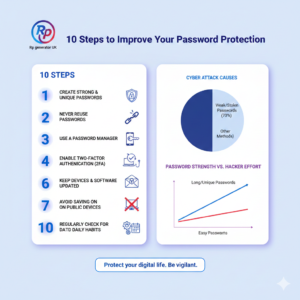
10 Steps to Improve Your Password Protection
Introduction: In today’s digital world, “password protection” is no longer just a technical term used by IT experts. It is something every internet user must
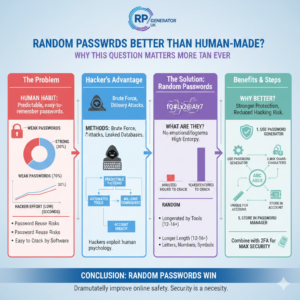
Are Random Passwords Better Than Human-Made?
Introduction: Why This Question Matters More Than Ever Have you ever created a password and felt confident because it included your name, a birthday, or
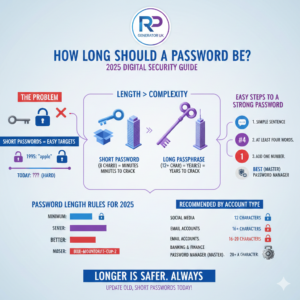
How Long Should a Password Be?
Have you ever found yourself staring at a computer screen, trying to think of a secret code, and wondered how long a password can be
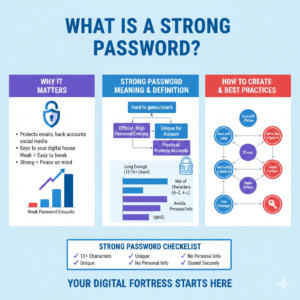
What Is a Strong Password?
Introduction: Why This Question Matters More Than Ever What is a strong password? This question sounds simple, yet it quietly protects your emails, bank accounts,
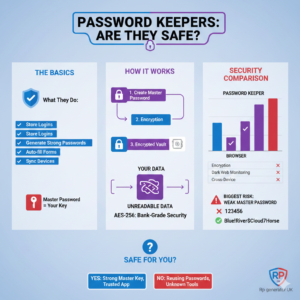
Are password keepers safe?
We will explain how password keepers work, how safe they really are, real-life stories, step-by-step guides, risks, benefits, and how to choose the right one.
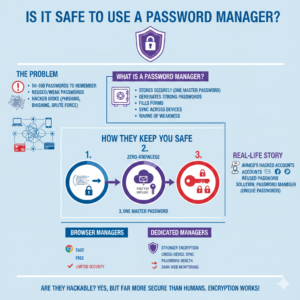
Is It Safe to Use a Password Manager?
In today’s online world, passwords are everywhere. Email, social media, banking, shopping, work tools—everything asks for a password. Now imagine trying to remember 50–100 different
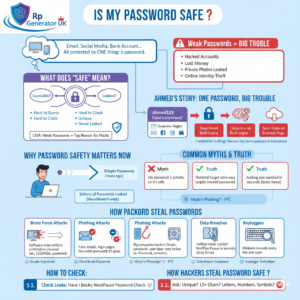
Is My Password Safe?
Have you ever logged into your email, social media, or bank account and suddenly wondered,“Is my password safe?” If yes, you are already one step
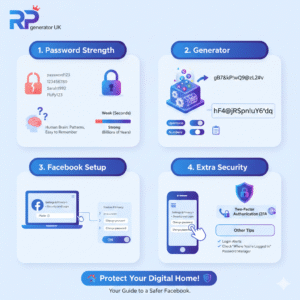
How to Use a Random Password Generator for Facebook?
Introduction: Imagine your Facebook account is your house. Inside, you have all your photos, your conversations with friends, and memories you’ve shared over the years.
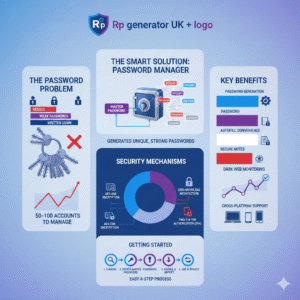
Why is a password manager one of the smartest things you buy?
Introduction: Imagine you have a hundred different doors in your life, and each one needs a unique key. Your front door, your car, your office,
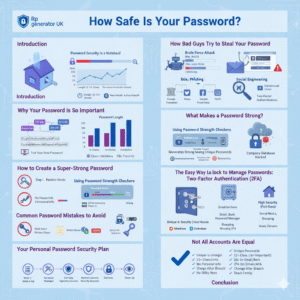
How Safe Is Your Password?
Introduction: Imagine your front door key. You wouldn’t make it simple, like a paperclip that anyone could bend to fit your lock, right? You wouldn’t
